
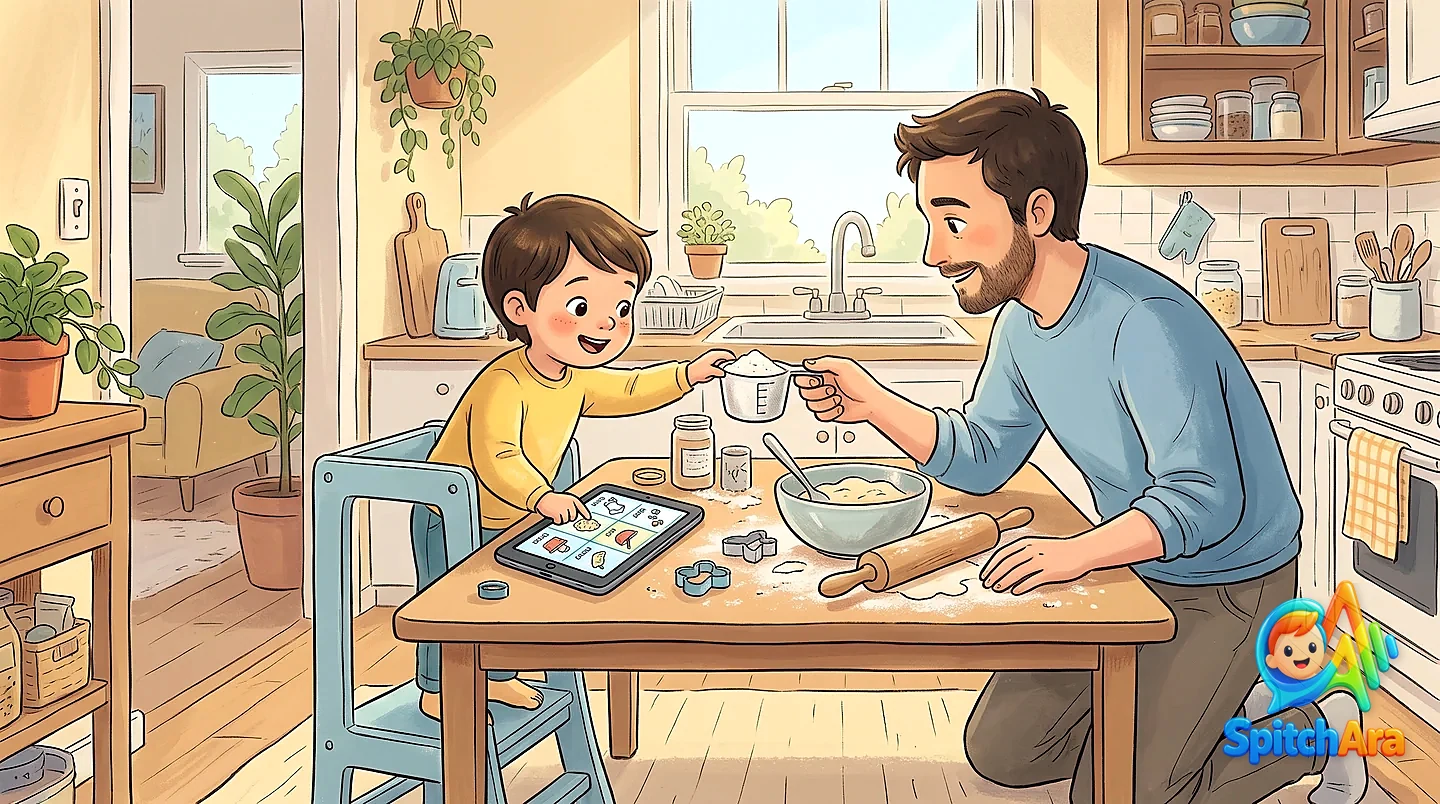
A child who does not use speech still has things to tell the people around them. They may want a joke repeated, a sound stopped, a person nearby or an activity changed. The challenge is to make those messages easier to express and easier for other people to understand.
Communication activities for a nonspeaking child should create real participation, not make speech the admission requirement. The child may use gestures, signs, pictures, a device, vocal sounds or several methods together. A useful activity allows those methods to affect what happens.
Start with access rather than a list of games
Before choosing an activity, ask how the child currently communicates and what makes that easier or harder. Can they reach the materials? Can they see or recognize the symbols? Do they need a different selection method or support with positioning? If access is difficult, a new game may simply create another situation in which the child cannot respond comfortably.
An individualized AAC assessment can consider communication needs, motor and sensory access, vocabulary and the people who will use the system with the child (American Speech-Language-Hearing Association, n.d.). AAC includes more than a tablet. The appropriate combination depends on the person, not on the price or appearance of the equipment.
Keep established supports within reach throughout the activity. A child should not have to request their communication system before being able to communicate. If a device needs charging or a board becomes wet, have a practical backup agreed with the team.
Choose an activity with genuine decisions
Making a simple picture scene, choosing a song or sending a toy down different routes can offer choices that matter. The adult's role is to present the possibilities clearly and respond to the child's contribution.
Imagine making a pretend picnic with suitable large objects. The child can choose who joins, where a cup goes, whether a toy receives food or when the game ends. They do not need to identify every item on request. If they push a plate away, “Not that one” may be the relevant response. If they point towards a sibling, the next action may be inviting the sibling to join.
The same principle works in real routines. Choosing a cup, asking for help with a coat or commenting on a dog outside gives communication an immediate purpose. Do not manufacture obstacles to force a message. Respond to natural opportunities without withholding basic care or a clearly requested support.
Model the communication method yourself
If the child uses symbols, adults can show how symbols carry messages during ordinary interaction. For example, while a toy moves, the adult might select “go” and say it. When they need assistance, they might model “help.” The child can observe without being required to imitate each selection.
A systematic review of aided AAC modelling examined 48 studies involving 267 participants and found generally favourable expressive-communication outcomes, although procedures differed (Biggs et al., 2018). That supports discussing modelling with a professional; it does not identify one universal script or guarantee a particular outcome for an individual child.
Ask for a demonstration using the child's actual system. Where symbols are located, how much language to model and how the child accesses the system all matter. Avoid reorganizing vocabulary every few days because a different layout looks simpler to an adult.
Make room for comments and opinions
Many activities offer repeated chances to request “more.” Requests are useful, but they are only part of a conversation. A child also needs ways to share amusement, reject an idea, tell someone what happened and express a preference that was not among the adult's options.
During a picture book, for instance, you might model a comment about a surprising image and then pause. The child could choose “funny,” point at another picture or turn the page. Follow the contribution rather than returning immediately to a prepared question.
In a family game, the child might decide who takes the next turn or tell someone that a piece is missing. These roles allow the child to influence other people rather than only respond to instructions. Choose roles that fit their access and interests, not a token job included for appearance.
Allow time without abandoning the exchange
Finding a message can take time, especially when a child is learning a system or using an alternative access method. Stay available and avoid guessing too quickly. At the same time, notice whether waiting has become uncomfortable or whether the child wants help.
You can ask a simple clarification and accept the child's familiar way of answering. If you misunderstand, acknowledge it: “That wasn't what you meant. Show me again.” Communication repair is a normal part of interaction, not proof that the system has failed.
Avoid taking the child's hand and directing it to a symbol to produce a message. The adult needs to know whose choice is being expressed. Ask the AAC team for safe, appropriate access support that preserves the child's authorship and ability to refuse.
Help other people become better partners
The child's opportunities depend partly on whether adults and peers recognize their messages. Show a relative how to offer an accessible choice, wait and respond. Explain the meaning of familiar signals as possibilities to check, not as a fixed dictionary.
The Communication Bill of Rights emphasizes being addressed directly, receiving a response and having meaningful communication across settings (National Joint Committee for the Communication Needs of Persons With Severe Disabilities, n.d.). At a family gathering, that might mean asking the child which activity they prefer instead of asking their caregiver while the child sits beside them.
Measure participation in ordinary terms
After an activity, ask what the child could do that mattered. Did they choose a partner, stop an unwanted action, introduce a topic or repair a misunderstanding? A record of these moments is more useful than counting only spoken words or device presses.
If participation remains difficult, review access, vocabulary, partner behaviour and the activity itself with the professional. Do not conclude that the child is not ready for communication because one method did not work. The next step may be a better fit between the person, the support and the situation.
References
American Speech-Language-Hearing Association. (n.d.). Augmentative and alternative communication (AAC). https://www.asha.org/practice-portal/professional-issues/augmentative-and-alternative-communication/
Biggs, E. E., Carter, E. W., & Gilson, C. B. (2018). Systematic review of interventions involving aided AAC modeling for children with complex communication needs. American Journal on Intellectual and Developmental Disabilities, 123(5), 443–473. https://doi.org/10.1352/1944-7558-123.5.443
Centers for Disease Control and Prevention. (2026a, February 16). Concerned about your child’s development? https://www.cdc.gov/act-early/families/concerned.html
Dowdall, N., Melendez-Torres, G. J., Murray, L., Gardner, F., Hartford, L., & Cooper, P. J. (2020). Shared picture book reading interventions for child language development: A systematic review and meta-analysis. Child Development, 91(2), e383–e399. https://doi.org/10.1111/cdev.13225
National Joint Committee for the Communication Needs of Persons With Severe Disabilities. (n.d.). Communication bill of rights (3rd ed.). American Speech-Language-Hearing Association. https://www.asha.org/njc/communication-bill-of-rights/
World Health Organization. (2022, April 27). Caregiver skills training for families of children with developmental delays or disabilities: Introduction. https://www.who.int/publications/i/item/9789240048836
